martes, 28 de septiembre de 2010

The Stroop Effect


The stroop effect is named after John Ridley Stroop. In the experiment he first did he asked people to read the written colour regardless of what the colour of the word was. In his second experiment he asked participants to say the colour of the words instead of the word and when they were shown a coloured square, they had to name the colour of the square. His third experiment just tested the same participants after they had some practice to investigate the effects of association. A difference that JR Stroop did in his experiment that is that he did not put time into account.

The results showed that people had more trouble when they tried to say the colour of the word rather than the word itself, psychologists believe that this sort of interference is caused by an area of the brain which focuses on written language, here is where the brain determines the meaning of the words. So there is a struggle between the right hemisphere and left hemisphere of the brain as one hemisphere reads the word and the other one looks at the colour.

In this experiment two theories are seen. These are Speed of Processing Theory (interference occurs because words are read faster than colors are named) and “Selective Attention Theory” (interference occurs because naming colors requires more attention than reading words)


http://faculty.washington.edu/chudler/words.html

Observations of the BaMbuti Pygmies


Colin Turnbull was an Englishman born in London who studied philosophy, politics and music. He was an important intellectual figure during the 60s and 70s and he studied anthropology at Oxford university, he then specialized in the African field, he got interested in this field when he traveled to East Africa, the Congo, the Sudan and Egypt on a motorcycle trip in 1951, that was when he first met the Pygmies.

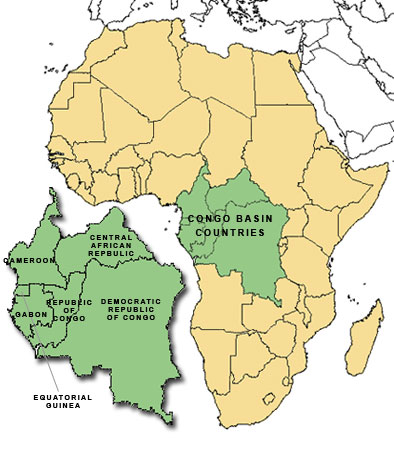
         Bambuti pygmies are a group of indigenous people of the Congo region in Africa. Their groups are relatively small, consisting of 15 – 60 people. They live within the forest; and this has influenced their perception, as they cannot see objects very far away, allowing Turnbull to investigate perception in more depth. He observed that the pygmies have never seen a very wide view. In other words, they were so used to live in the forest they never got the chance to go outside and see other things. An example is when Kenge noticed the buffalo far away and thought they were insects of some sort, but when they got closer to them and he saw the buffalo getting bigger and bigger as they approached he was dazzled. He could not believe what he was seeing because throughout his entire live he always had objects an animals very close to him so when he saw something far away, it looked small to him, hence why he thought the buffalos were insects.

         This study was important as it shows and supports other experiments which say that perception can deceive us. 


martes, 7 de septiembre de 2010

The Myth of Multitasking

1. Why is multitasking considered by many psychologists to be a myth?


Because as Lord Chesterfield said “There is time enough for everything in the course of the day, if you do but one thing at once, but there is not time enough in the year, if you will do two things at a time.” Meaning that multitasking exists but only to some extent and as we “multitask” our performance in both activities decreases.


2. To what does the term "response selection bottleneck" refer?

It refers to the reaction of the brain towards multiple stimuli. As all these stimuli are forced into the brain, the brain “switches between tasks” which leads to a massive loss of time from what the original task was.


3. David Meyer has found that multitasking contributes to the release of stress hormones and adrenaline. Why is this important?

Because it affects the mortality rate of people due to the cause of long-term health problems and loss of short-term memory.


4. Explain what Russell Podrack found regarding multitasking.

He showed that even if people “multitask” their productivity will be relatively low and they won’t be able to store the information in the Long-term memory. His experiment consisted of observing the brain by scanning it. His results showed that when people are distracted the striatum shows activity (an area of the brain used for learning new skills). Whereas when people are not being distracted their hippocampus is being used (area of the brain used for storing and recalling information).


5. What does the author conclude could happen to our culture as a result of increased multitasking?

The author believes that if multitasking increases we could end up depending on technology to do our everyday routine. Meaning we will have access to new information but we won’t be able to reason wisely.

martes, 31 de agosto de 2010

Colin Turnbull

http://www.colinturnbull.com/


http://www.mnsu.edu/emuseum/information/biography/pqrst/turnbull_colin.html

Colin Turnbull was an Englishman born in London who studied philosophy, politics and music. He was an important intellectual figure during the 60s and 70s and he studied anthropology at Oxford university, he then specialized in the African field, he got interested in this field when he traveled to East Africa, the Congo, the Sudan and Egypt on a motorcycle trip in 1951, that was when he first met the Pygmies. Then in 1954 he returned to Africa to investigate and record the native music and then he went again to study the Pygmie life in more depth. Turnbull made around 6 long trips to the Congo. During these trips he met an African who would later on be his partner. His African partner’s name was Joe Towels and they were partners for 30 years. They lived in New York and rural Virginia but in 1988 Joe Towels died of AIDS. After Towels death, Turnbull went into a deep depression and went to the Dalai Lama’s eldest brother to become a Buddhist monk afterwards he ended up giving away all the money he had and taught music, fieldwork, farming and writing until his own death in 1994 caused by AIDS as well.


miércoles, 18 de agosto de 2010

Perception IS Reality.

Perception is the way in which an individual sees the world. The brain is so powerful that is able to store memories and necessary skills so that the person can survive. These memories or experiences are what help and make each of us different from another even though we see the same thing or hear the same thing. This suggests an explanation for why some people are passionate about some things and other people are just not interested. The way we see the world is important because only we can appreciate it, we are unable to make others see the world as we do. Which is why the phrase "perception is reality" comes to be true. As we cannot see the world as others do. Our brain just takes in information, connects it to our experience and thats why we decide if we like something or not. For example, when we encounter an image that has different shapes, our brain automatically tries to work out what the object could be and when it finds a shape, that is what we see. However, there are some ways in which perception can be tricked and we see distorted images or images which are not what they look like.

http://www.google.hn/imgres?imgurl=http://www.awakeningstarseeds.com/perception_vase.gif&imgrefurl=http://www.awakeningstarseeds.com/perception.htm&h=300&w=300&sz=3&tbnid=b6ZUU-906Ho9-M:&tbnh=116&tbnw=116&prev=/images%3Fq%3Dperception&hl=es&usg=__2aBycEHaowq1FQcWuF64MejlLco=&sa=X&ei=XT5sTO-SBIWclgeHm6gv&ved=0CDUQ9QEwAw

http://www.whitedovebooks.co.uk/articles/sp/perception.htm

lunes, 16 de agosto de 2010

Why Psychology?

I've been studying psychology for about a year and I've really liked it so far. The reason why I chose psychology was because I thought it was an interesting subject and I wanted to actually find out what psychology was about. Now that I have a clearer idea of what psychology is and how it is divided. I would like to take that and apply it in what could be potentially my career. However, I'm still unsure how I am going to achieve it as there are many factors that affect my decision. Psychology has helped me understand more things about human behaviour and has shown me possible explanations for every day behaviour.